Is Your Roof Ready for the 2026 Hurricane Season?
Forecasters expect a below-normal 2026 Atlantic hurricane season — NOAA predicts 8–14 named storms and Colorado State University projects around 11, thanks to a developing El Niño. But a “quiet” season is not a safe season: South Florida only needs one landfall to lose a roof. Before peak season (August–October), get a professional roof inspection, secure or replace loose tiles and flashing, clear gutters and drains, trim overhanging branches, and photograph your roof for insurance. A pre-season inspection is the single best way to avoid emergency repairs later.
The Atlantic hurricane season runs June 1 through November 30, and its most active stretch for South Florida is August through October. This year the seasonal outlook is encouraging on paper — but the homeowners who fare best in Palm Beach and Broward County aren’t the ones who bet on a calm season. They’re the ones whose roofs were ready before the first named storm formed.
What does the 2026 hurricane forecast actually say?
As of the 2026 outlooks, NOAA is forecasting a below-normal season with roughly 8 to 14 named storms, 3 to 6 hurricanes, and 1 to 3 major hurricanes. Colorado State University similarly lowered its numbers to about 11 named storms and 5 hurricanes, citing a developing El Niño that tends to increase wind shear and disrupt storm formation in the Atlantic.
Here’s the part that matters for your roof: seasonal totals tell you almost nothing about your risk. Hurricane Andrew struck South Florida in 1992 during a season with only a handful of storms. It only takes one storm on the wrong track to remove tiles, peel back metal, or open your roof to water. A below-normal forecast is a reason to prepare calmly — not a reason to skip preparing.
The Palm Beach & Broward roof-readiness checklist
BEFORE PEAK SEASON (DO THIS NOW)
- Get a professional roof inspection. A roofer will spot loose tiles, lifted panels, worn flashing, and aging underlayment that you can’t see from the ground — the exact weak points wind and water exploit.
- Secure or replace loose tiles and flashing. Cracked tiles and failing flashing around vents, skylights, and chimneys are the most common storm entry points.
- Clear gutters, valleys, and drains. Blocked drainage forces water under your roof covering during heavy rain. Flat and low-slope roofs especially need clear scuppers and drains.
- Trim overhanging branches. Limbs become projectiles and abrasion points in high wind. Cut back anything hanging over the roof.
- Check and reseal roof penetrations. Pipe boots, vents, and skylight seals dry out and crack in the Florida sun — prime leak points once the wind drives rain sideways.
- Document your roof’s condition. Take dated photos of your roof now. If a storm damages it later, before-and-after evidence makes your insurance claim far smoother.
What about wind mitigation?
Beyond leaks, wind mitigation features — like properly nailed decking, secondary water barriers, and hurricane straps or clips — determine how your roof holds up in sustained wind. Many of these can also earn you insurance premium discounts through a wind mitigation inspection. If your roof is older or you’ve never had a wind mitigation report, it’s worth asking your roofer about it before the season peaks.
What should I do if a storm damages my roof?
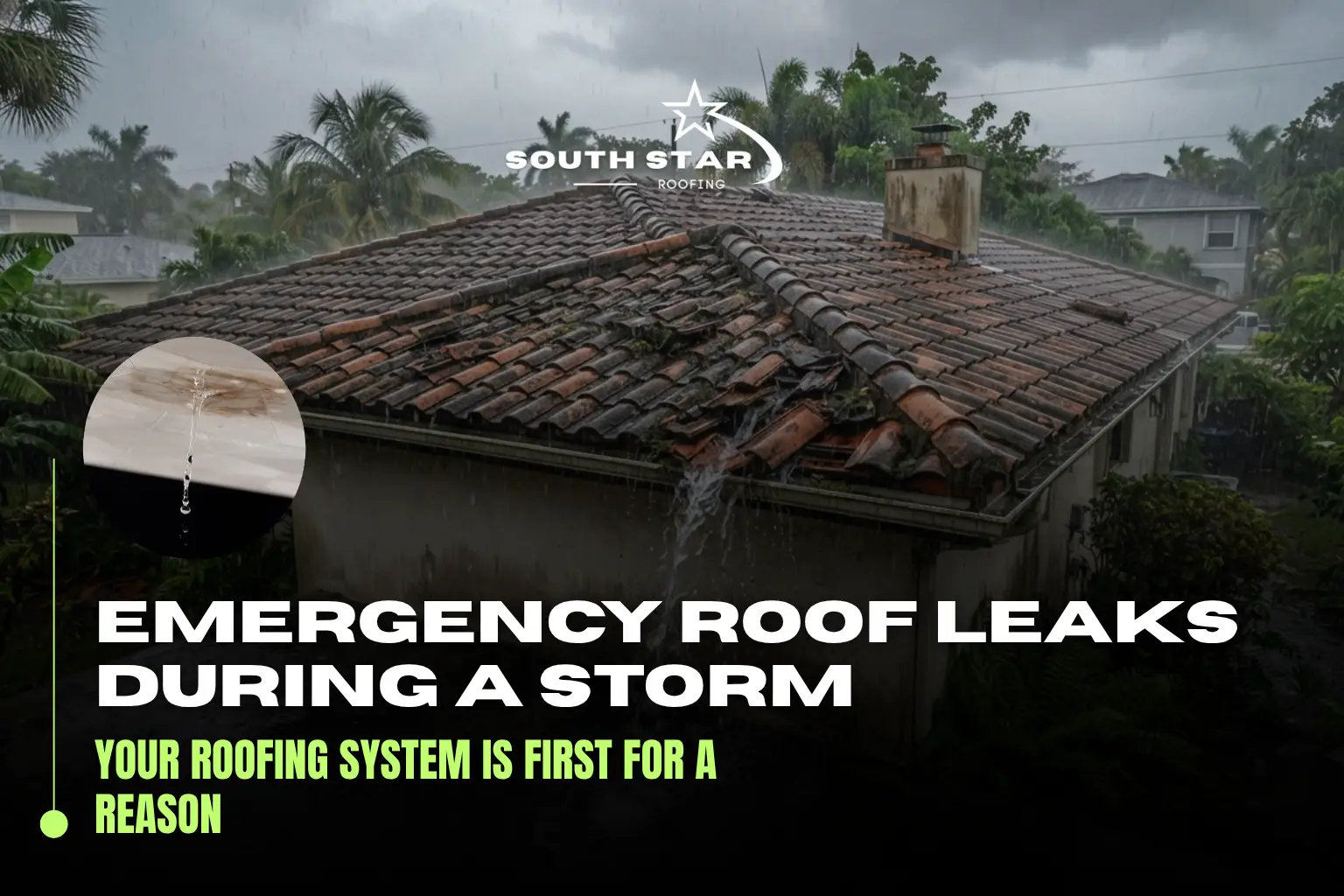
If you find missing tiles, lifted metal, or interior leaks after a storm, don’t climb up to investigate — damaged roofs are unstable. Document what you can safely see from the ground, call a licensed roofer for emergency stabilization, and report the damage to your insurer promptly. Fast temporary protection prevents a bad day from becoming a gutted ceiling. (See our emergency roof leak guide for the step-by-step.)
Why does a quality roof matter more in South Florida?
On the high-end homes we work on across Palm Beach and Broward County, the roof isn’t just protection — it’s a major part of the home’s value and appearance. A properly installed, well-maintained tile, metal, or shingle system with sound underlayment and correct fastening is what stands between a passing storm and an insurance nightmare. Quality installation and honest maintenance aren’t where you cut corners in hurricane country.
Frequently Asked Questions
When should I get my roof inspected before hurricane season?
Ideally in late spring or early summer, before the August–October peak. That leaves time to complete any repairs while conditions are calm. If you haven’t yet this year, do it now — sooner is always better.
Does a below-normal forecast mean my roof is safe?
No. Seasonal forecasts predict the number of storms, not where they’ll go. A single landfalling hurricane can cause severe roof damage regardless of how quiet the overall season is.
Can a roof inspection lower my insurance costs?
A wind mitigation inspection can document features that qualify for premium discounts. Ask your roofer whether your roof has mitigation features worth reporting to your insurer.