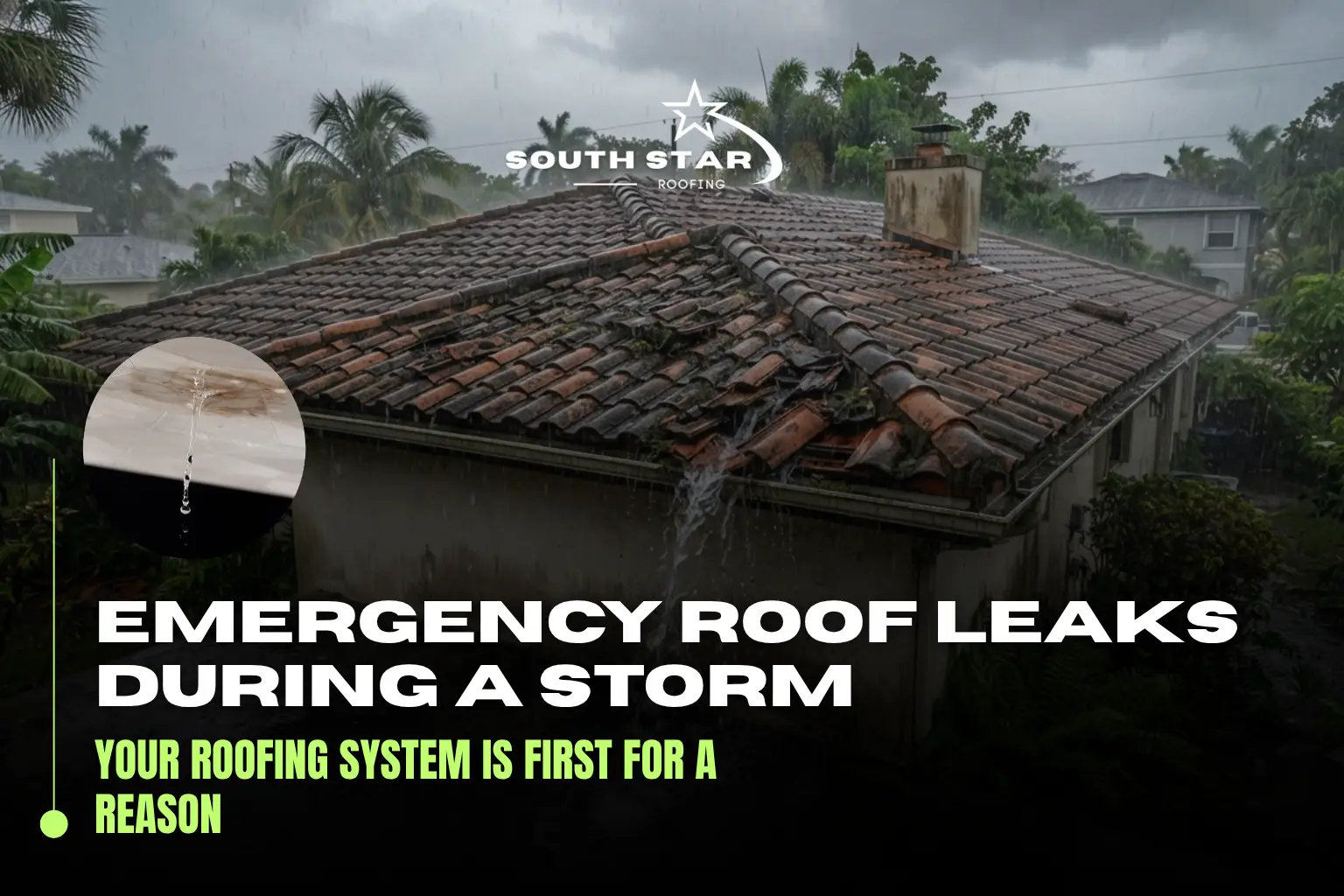
Roof Leaking During a Storm? What to Do First — An Emergency Guide for Palm Beach & Broward Homeowners
If your roof is leaking during a storm, act in this order: move valuables and electronics clear, contain the water with buckets and towels, relieve pressure on a bulging ceiling by carefully piercing it to drain, photograph everything for insurance, and call a licensed emergency roofer. Never climb onto a wet or wind-exposed roof yourself. A leak caught in hours can often be stabilized for a few thousand dollars — water left to spread into insulation, drywall, and framing can turn a $2,300 repair into a five-figure one.
In Palm Beach and Broward County, the worst roof leaks almost never happen on a calm day — they happen at the peak of a summer downpour or a tropical system, when driving rain finds every weak point at once. When water is coming through your ceiling, the steps you take in the first hour genuinely change how much damage your home takes and how much the repair costs. Here is exactly what to do.
What should I do the moment my roof starts leaking?
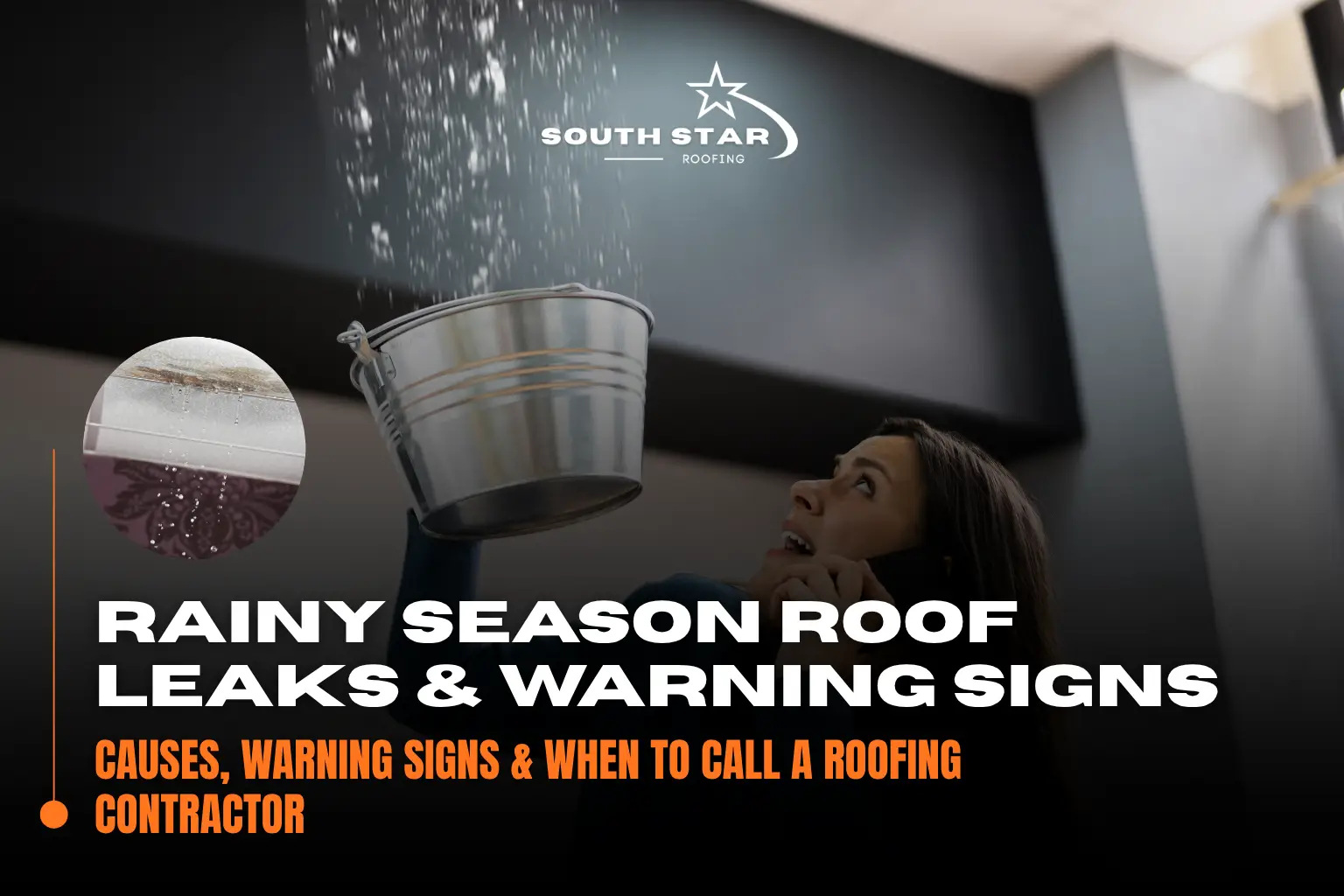
- Protect people and valuables first. Move furniture, rugs, electronics, and anything irreplaceable out from under the leak. Water and electricity are a dangerous mix — if water is near outlets, light fixtures, or your panel, shut off power to that area.
- Contain the water. Put buckets or bins under active drips and lay towels to stop water from spreading across floors. Empty containers before they overflow.
- Relieve a sagging ceiling. A bulging, water-filled ceiling can collapse. If it is safe to reach, place a bucket underneath and pierce the center of the bulge with a screwdriver to let the water drain in a controlled way — this actually prevents a larger ceiling failure.
- Document everything for insurance. Photograph and video the leak, the ceiling, damaged belongings, and any exterior damage you can see safely from the ground. Timestamped evidence protects your claim.
- Do not go on the roof. Wet tile, wet metal, and gusting wind cause serious falls every storm season. Roof work during active weather is for trained, insured professionals only.
- Call a licensed emergency roofer. The faster a pro applies a proper temporary dry-in or tarp, the less water enters your home. Describe where the leak is and what you see — it helps them arrive prepared.
Why is fast action so important with a roof leak?
Water damage compounds by the hour. Within a day, moisture wicks into drywall, insulation loses its R-value, and wood framing begins to hold water. Within 24–48 hours, mold can start in South Florida’s warm, humid air. A small active leak addressed the same day is often a minor repair; the same leak ignored over a weekend can mean replaced insulation, new drywall, repainting, and remediation — on top of the original roof fix. Speed is the cheapest tool you have.
Should I put a tarp on my own roof?
We understand the instinct, but we don’t recommend it during a storm. Climbing a wet, sloped tile or metal roof in wind is how homeowners get seriously hurt. A tarp that isn’t anchored correctly can also blow off and cause more damage, or trap water and make the leak worse. If conditions are calm and you’re only doing something from the ground — like clearing a blocked gutter you can safely reach — that’s reasonable. Anything on the roof itself should wait for a professional emergency crew.
What counts as a roofing emergency?
- Active water coming through the ceiling or down interior walls during rain
- A sagging or bulging ceiling
- Missing tiles, lifted metal panels, or a section of roof torn open by wind
- A tree limb or debris that has punctured the roof
- Visible daylight through the roof deck from inside the attic
If you’re seeing any of these, treat it as urgent. Even if the rain stops, the opening is still there for the next band of weather.
How much does emergency roof repair cost in Palm Beach & Broward County?
Most residential roof repairs run from about $2,300 for smaller fixes up to $15,000 for larger or more complex damage, depending on the roof type, the size of the affected area, and the materials involved. Emergency stabilization (a professional temporary dry-in to stop water) is typically a smaller first step, followed by the permanent repair once the roof is dry and fully assessed. The single biggest cost driver is how long water was allowed to spread — which is exactly why calling early saves money.
A quick note on payment: South Star Roofing does not offer financing. We focus on doing high-quality, lasting work on Palm Beach and Broward homes, and we’ll always give you a clear, honest scope before any work begins.
Frequently Asked Questions
Does homeowners insurance cover storm roof leaks?
Often yes, when the leak is caused by sudden storm damage rather than long-term wear or neglect. Document everything immediately and report the claim promptly. A licensed roofer’s inspection report helps establish that the damage was storm-related.
How quickly can a roofer come out during a storm?
Crews generally cannot safely work on a roof while a storm is actively overhead, but a good emergency roofer will get you scheduled for the first safe window and walk you through protecting your home in the meantime. The sooner you call, the sooner you’re on the list.
Will a small leak really cause big damage?
Yes. A leak the size of a coin can saturate insulation and drywall and feed mold growth within a day or two in South Florida’s humidity. Small leaks are the ones that quietly become expensive.