|
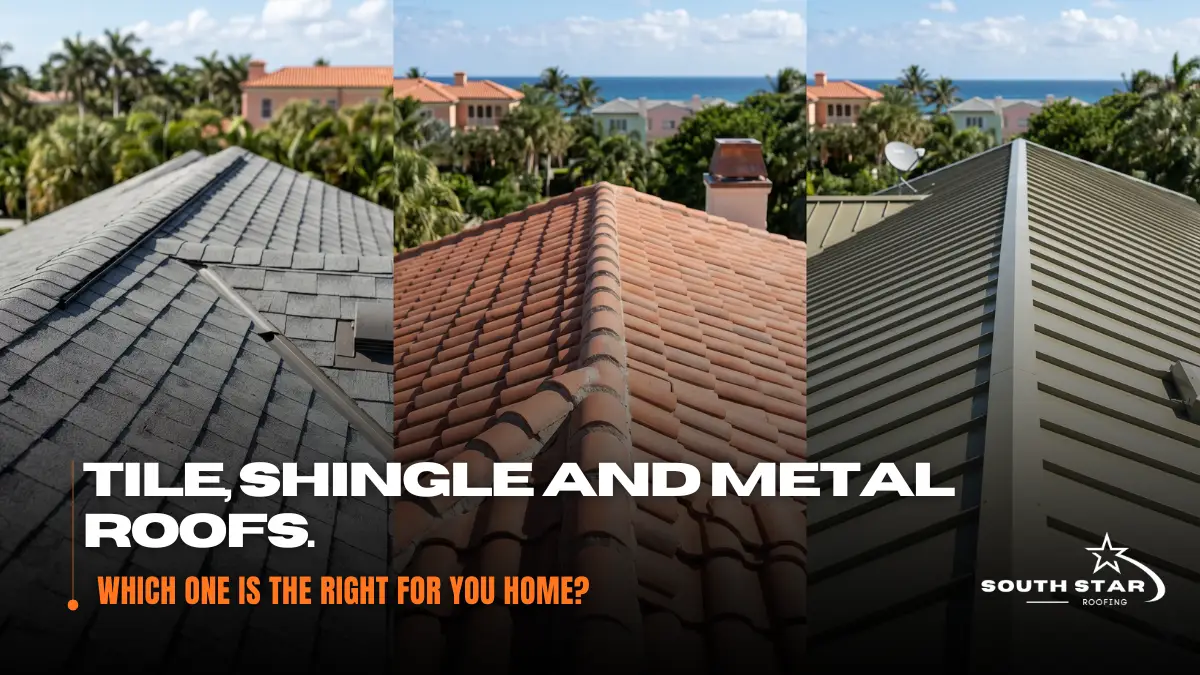
Quick Answer For South Florida homes, asphalt shingles offer the lowest upfront cost ($22,000 – $30,000) but the shortest lifespan (15 – 25 years). Tile roofs ($27,000 – $43,000) deliver 40 – 50+ years of life and superior hurricane resistance. Metal roofs ($32,000 – $60,000) combine 40 – 70 years of life with the best energy efficiency. The right choice depends on your budget, how long you plan to own the home, and your home’s architectural style. |
Asphalt shingle roofs
Asphalt shingles are the most common roof in the U.S. and the most affordable option in Palm Beach County. A new shingle roof typically runs $22,000 to $30,000 installed. Lifespan in South Florida is 15 to 25 years — shorter than in northern climates because UV exposure and humidity break down the asphalt faster.
Best for: homeowners on a tighter upfront budget, rental properties, or anyone planning to move within 10 to 15 years.
Concrete and clay tile roofs
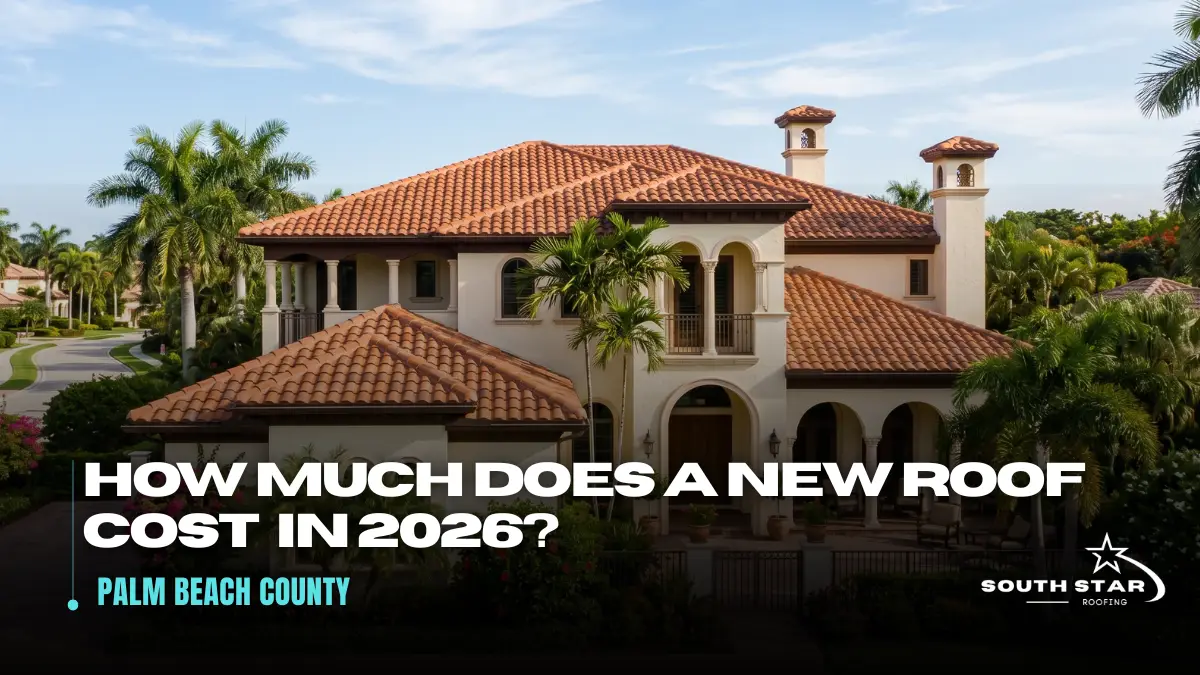
Tile is the signature roof of South Florida — and not just for looks. Concrete and clay tile roofs cost $27,000 to $43,000 installed and last 40 to 50+ years. Properly installed tile holds up exceptionally well to hurricane-force winds, and the air gap under each tile actually improves attic ventilation, which lowers cooling costs.
Best for: Mediterranean, Spanish, and coastal-style homes, and homeowners who plan to stay in the home long-term.
Metal roofs
Metal roofing is the fastest-growing residential roof type in Florida. Standing seam and metal tile systems cost $32,000 to $60,000 installed and last 40 to 70 years. Reflective coatings dramatically reduce attic temperatures, and metal roofs typically perform best in hurricanes because there are fewer fasteners and seams to fail.
Best for: modern homes, long-term owners, homeowners focused on energy efficiency, and anyone in coastal high-wind zones.
Side-by-side comparison
|
Factor |
Asphalt Shingle |
Concrete/Clay Tile |
Standing Seam Metal |
|
Typical install cost (full replacement) |
$22,000 – $30,000 |
$27,000 – $43,000 |
$32,000 – $60,000 |
|
Expected lifespan |
15 – 25 years |
40 – 50+ years |
40 – 70 years |
|
Hurricane / wind performance |
Good (with rated product + nailing) |
Excellent when properly installed |
Excellent — best in class |
|
Energy efficiency |
Moderate |
High (air gap under tile) |
Very high (reflective coatings) |
|
Best for |
Tight budgets, faster turnaround |
Mediterranean / Spanish-style homes |
Modern homes, long-term owners |
Which one is right for you?
If you’re going to sell within 10 years and want the lowest upfront cost, shingles. If you’re staying long-term in a Mediterranean-style home, tile. If you want the longest-lasting, most energy-efficient roof and have the budget for it, metal. A good roofer will walk you through the trade-offs on your specific home — not push you toward one product.
Frequently asked questions
What’s the best roof material for South Florida hurricanes?
Properly installed metal roofs and concrete tile roofs both perform exceptionally well in hurricane-force winds. Wind performance depends as much on installation quality, fasteners, and underlayment as it does on the material itself.
Are metal roofs noisy in heavy rain?
No — modern residential metal roofs are installed over solid decking and underlayment, which absorbs sound. Inside the home, a metal roof in rain sounds about the same as a shingle or tile roof.
Can you install a metal roof over an existing shingle roof in Florida?
In some cases yes, but Florida’s strict building code usually makes a full tear-off the better choice. A tear-off lets the roofer inspect and replace damaged decking and install proper underlayment — both critical for hurricane performance.
Do tile roofs increase home value in Palm Beach County?
Tile roofs typically improve curb appeal and resale value, especially on Mediterranean and Spanish-style homes common to Palm Beach County. The long lifespan also reassures buyers that they won’t face an immediate roof replacement.
Last updated: May 2026.